Table of Contents
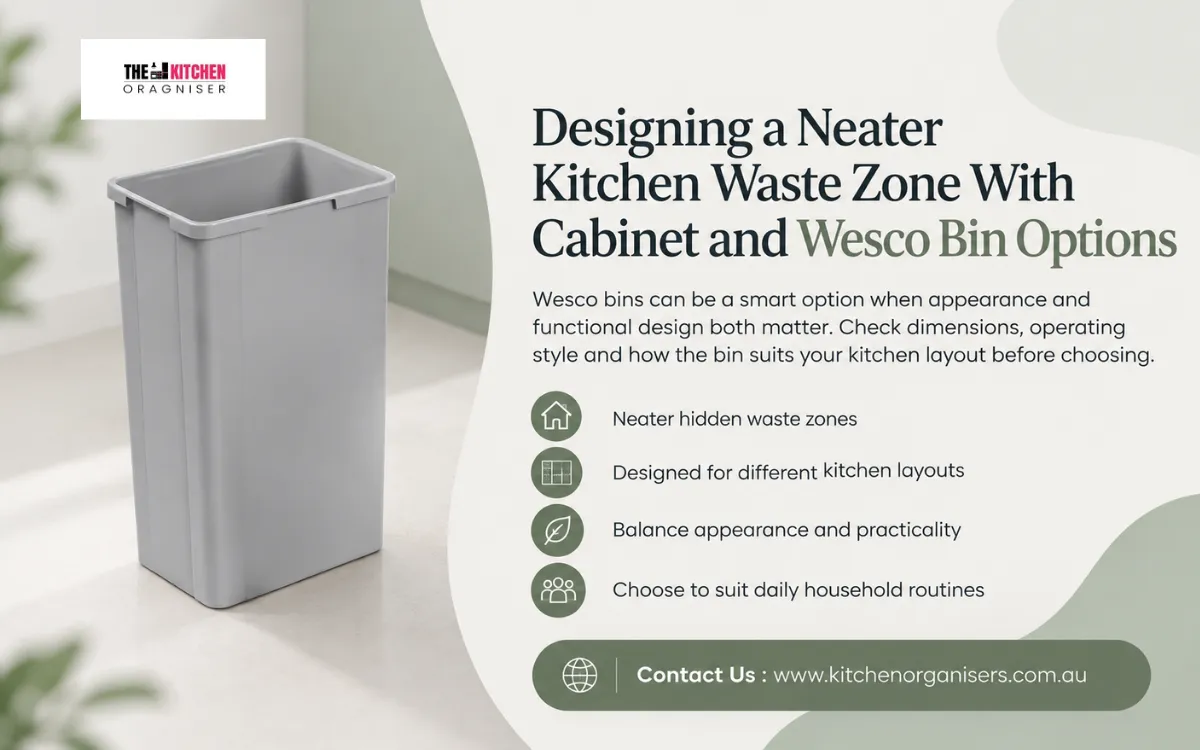
Waste disposal is one of the most frequently repeated tasks in a kitchen, yet the bin itself is often an afterthought. A container placed wherever there is spare floor space can work, but it may interfere with movement, attract attention visually or become inconvenient during food preparation.
A better approach is to design a dedicated waste zone. This could involve a kitchen bin cabinet, integrated containers or a branded solution such as Wesco, depending on the layout and requirements of the kitchen.
Think of Waste as a Kitchen Work Zone
A kitchen works best when related activities are positioned logically. Cooking tools sit near preparation areas, frequently used food items are easy to reach, and waste disposal should also have a sensible location.
The bin does not necessarily need to be directly beside the sink. Consider where food preparation happens most often and where packaging is opened.
A practical waste zone should offer:
-
Convenient access
-
Enough capacity for normal household use
-
Easy liner replacement
-
Simple cleaning
-
Suitable separation for different waste streams
-
Minimal interference with other cabinets
This turns waste management from an awkward necessity into part of the kitchen layout.
What Makes a Cabinet-Based Bin Useful?
A cabinet can conceal waste while preserving the appearance of the room. Instead of leaving a freestanding container beside an island or worktop, the waste can be stored behind a door or within a purpose-designed mechanism.
A kitchen bin cabinet also makes it possible to dedicate a specific section of the kitchen to rubbish and recycling.
Consider the Cabinet’s Location
The ideal location depends on the room.
For some kitchens, the cabinet near the sink is the obvious choice. For others, a cabinet beside the preparation area may provide better access.
If the kitchen has an island, consider whether the waste zone needs to be accessible from both sides or whether one location is sufficient.
Exploring Wesco Bins
Wesco is a recognised name in kitchen storage and waste solutions, and wesco bins can be considered when appearance and functional design both matter.
Different Wesco products and configurations may suit different kitchen layouts, so the specific dimensions and operating style should be checked before purchase.
Rather than selecting a bin simply because it looks attractive, compare it against the cabinet and the household’s routine.
Check the Details Behind the Design
A visually appealing bin still needs to work practically.
Look at:
-
Container capacity
-
Dimensions
-
Opening method
-
Liner access
-
Cabinet compatibility
-
Cleaning requirements
-
Available space around the unit
The right balance is a system that looks appropriate but remains easy to operate every day.
Plan for General Waste and Recycling
Modern households may need to manage several categories of waste. A single container can be enough for some kitchens, while others need separate spaces for recycling or food scraps.
This is where kitchen waste bins can be planned as a group rather than as an individual product.
Measure Before Designing the Arrangement
If multiple containers are needed, cabinet width becomes particularly important.
Two smaller bins may fit better than one large container. Alternatively, a larger main container with a separate recycling solution may be more convenient.
Create a simple sketch of the cabinet and mark where each container would sit. This can make it easier to identify conflicts before installation.
Make the Waste Zone Easy to Maintain
The waste area is exposed to food scraps, packaging and occasional spills. Maintenance therefore deserves attention from the beginning.
A practical arrangement should allow the user to remove liners without excessive lifting or reaching. Surfaces around the containers should also remain accessible for cleaning.
Avoid creating a layout where the only way to clean behind the bin is to dismantle the entire cabinet arrangement.
Think About the Household Routine
A kitchen waste system needs to work for everyone who uses the room.
Ask:
Who empties the bins?
If the container is difficult to remove, the task becomes unnecessarily unpleasant.
How often is it emptied?
Capacity should reflect actual household usage.
Is recycling separated?
If yes, allow enough space for the required categories.
Where are liners stored?
Keeping replacement bags nearby can make the whole process smoother.
Appearance Still Matters
A well-planned kitchen should feel cohesive. Waste containers do not need to dominate the room.
Cabinet integration can reduce visual clutter, while a carefully selected freestanding or branded container can complement the overall style when concealment is not possible.
This is one reason homeowners may compare several waste options rather than choosing the first container that fits.
Why Choose Us
KitchenOrganisers.com.au brings together kitchen organisation products designed around practical household needs. Its kitchen waste range gives customers options for creating dedicated waste zones, including solutions intended for cabinet integration and products from recognised kitchen storage brands.
The useful part of this approach is flexibility. Customers can assess their kitchen layout, available cabinet space and preferred operating style before selecting a waste solution.
About Us
KitchenOrganisers.com.au provides products for improving the organisation and functionality of kitchen spaces. Its range includes waste-management solutions alongside other kitchen storage products.
For homeowners working on a renovation or updating an existing kitchen, the focus can be placed on making everyday storage and waste handling more convenient without sacrificing the appearance of the room.
Give the Bin a Proper Place
A kitchen waste area deserves the same planning as other parts of the room. The best arrangement considers location, capacity, cabinet dimensions, access and cleaning before a product is selected.
Whether the final solution involves a kitchen bin cabinet, Wesco bins or another arrangement, the goal remains the same: make waste disposal simple, discreet and practical.
When kitchen waste bins are integrated thoughtfully into the room, one of the most repetitive household tasks can become noticeably easier to manage.